Our Location
Dongguan, China
Call Us
+86 769-85842789
E-mail Us
pw@pw-test.com
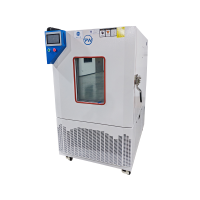
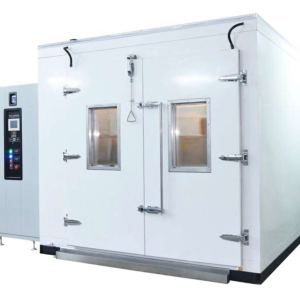
Features:It is mainly used to simulate high and low temperature environments, and can achieve cyclic changes or constant control of temperature. It does not have humidity control function.
Temperature range:generally from -40℃ to 150℃, Customizable -70°C.
Heating and cooling rate:The heating rate was 3℃/min and the cooling rate was 1℃/min.
Application Scenario:It is commonly used for storage and performance testing of electronic, electrical, communication, metal, plastic and other products under high and low temperature conditions.
Cost Price:The structure and function are relatively simple, the price is relatively low, and the operating cost is relatively low.
The accelerometer in the mobile phone is tested for low temperature startup.
The mobile phone is placed in a professional high and low temperature test chamber and tested at -20°C or even lower. If the accelerometer is found to have low temperature startup problems, optimization and improvement will be made in terms of material selection, circuit design, packaging process, etc. to ensure that the product can be used normally in various low temperature environments.
Optical glass refractive index, transmittance, dispersion and other tests at different temperatures.
High temperature may change the refractive index of optical glass, resulting in changes in the light propagation path and affecting the imaging quality; at low temperatures, the light transmittance of glass may decrease, reducing the luminous flux of the optical system.Improvements can be made in three aspects: material formulation optimization, manufacturing process improvement and optical system design adjustment.
High and low temperature charging and discharging performance test of new energy batteries.
Under set high and low temperature environments, the battery is charged and discharged, and parameters such as charging time, charging efficiency, discharge capacity, discharge platform, and energy output are recorded to evaluate the battery’s charging and discharging capabilities at different temperatures.This can be improved by optimizing battery materials, improving battery structure design, perfecting battery management system and adopting external environment control.
Test the performance changes of automobile interior plastic parts, rubber sealing strips, etc. at high and low temperatures, such as whether the plastic becomes brittle at low temperatures, whether the rubber loses its elasticity, and whether deformation and fading occur at high temperatures.
It can start from material selection, formula optimization, processing technology improvement and design optimization.
Conduct temperature tests on industrial IoT sensor chips to ensure that the sensors can work normally and data is accurately transmitted in the high and low temperature environments of industrial production.
Chips can be improved in terms of chip design, material selection, manufacturing process and test optimization.
When packaging food or medicine at high temperatures, the gas inside the packaging expands, which may cause leakage at the seal; when packaging materials shrink at low temperatures, it may also affect the sealing effec.
This can be done from aspects such as packaging material selection, sealing structure design, production process optimization, and quality inspection improvement.
Different types of high and low temperature test chambers have different temperature ranges. Common low temperatures can reach -70°C and high temperatures can reach +150°C. Understanding this indicator can help you determine whether it meets your own test needs.
Uniformity is related to the accuracy of the test results. Generally, an air circulation system is used, such as reasonably designing the air duct and using fans to promote air circulation, to ensure uniform temperature in the box. The common indicator is within ±2℃.
The fluctuation reflects the temperature stability and is usually required to be controlled within ±0.5℃. Excessive fluctuation will affect the test accuracy.
The heating and cooling rate affects the test efficiency, which is generally 1℃ - 3℃/minute. The rapid heating and cooling test chamber has a faster rate and can meet the tests that require a high temperature change rate.
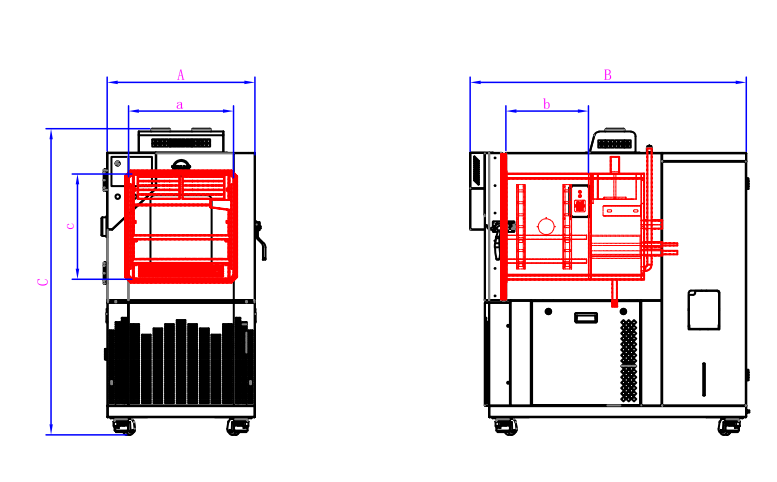
| model | PW-CTH80-40 | PW-CTH100-40 | PW-CTH150-40 | PW-CTH225-40 | PW-CTH408-40 | PW-CTH1000-40 |
|---|---|---|---|---|---|---|
| Volume (L) | 80L | 100L | 150L | 225L | 408L | 1000L |
| a | 400 | 500 | 500 | 600 | 800 | 1000 |
| b | 400 | 400 | 500 | 500 | 600 | 1000 |
| c | 500 | 500 | 600 | 750 | 850 | 1000 |
| A | 680 | 700 | 800 | 700 | 1000 | 1200 |
| B | 1200 | 1310 | 1410 | 1410 | 1510 | 1910 |
| C | 1620 | 1455 | 1570 | 1705 | 1680 | 1900 |
| Total Power | About 5KW | About 6KW | About 6.5KW | About 7KW | About 8KW | About 10KW |
| Voltage V | 220 | 220 | 220 | 380 | 380 | 380 |
Dongguan, China
+86 769-85842789
pw@pw-test.com
By continuing to use this website, you consent to the use of cookies in accordance with our Cookie Policy.
Accept